Stocked Parts
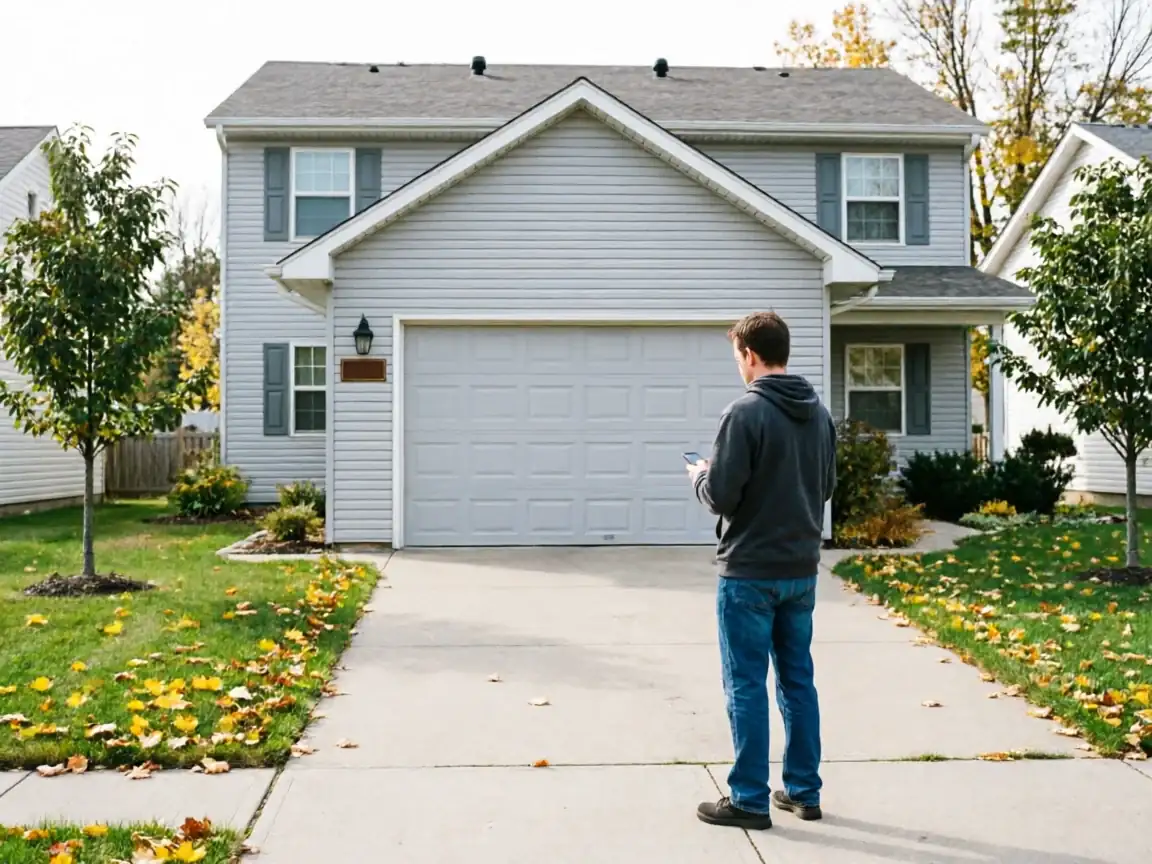
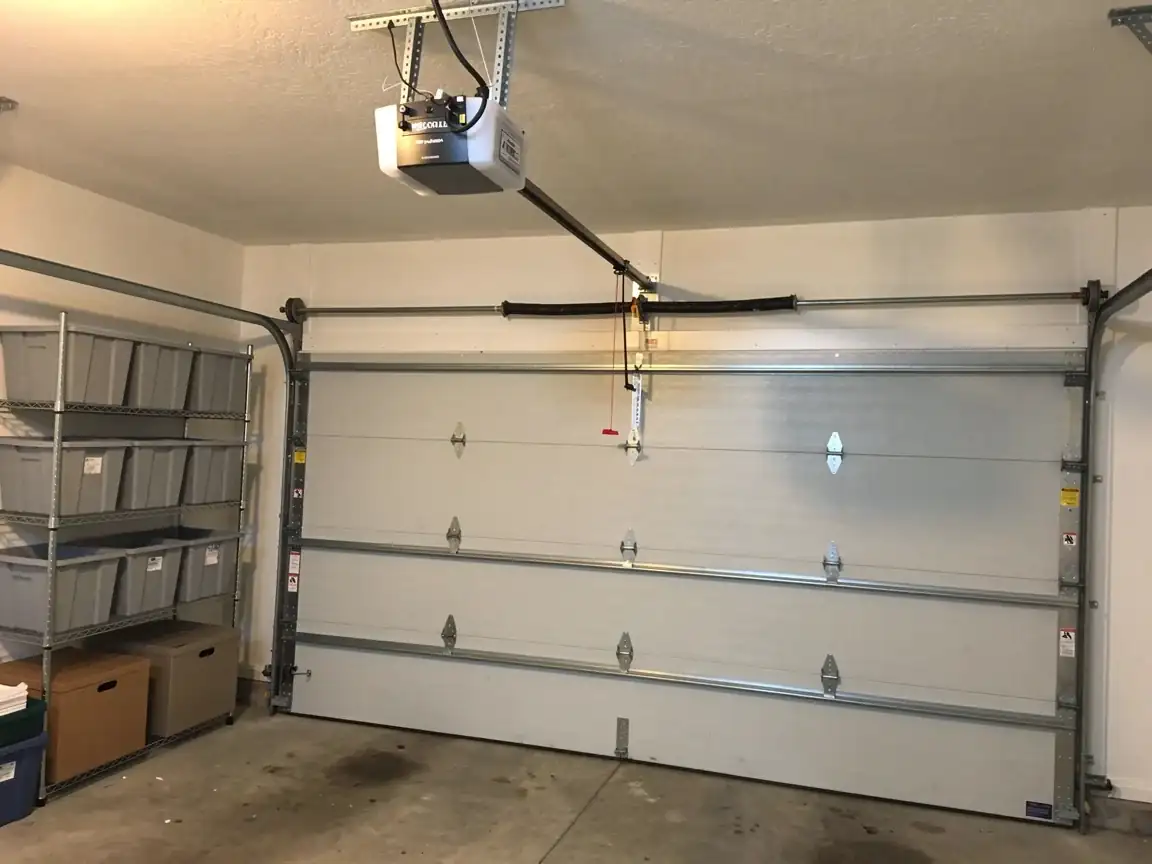
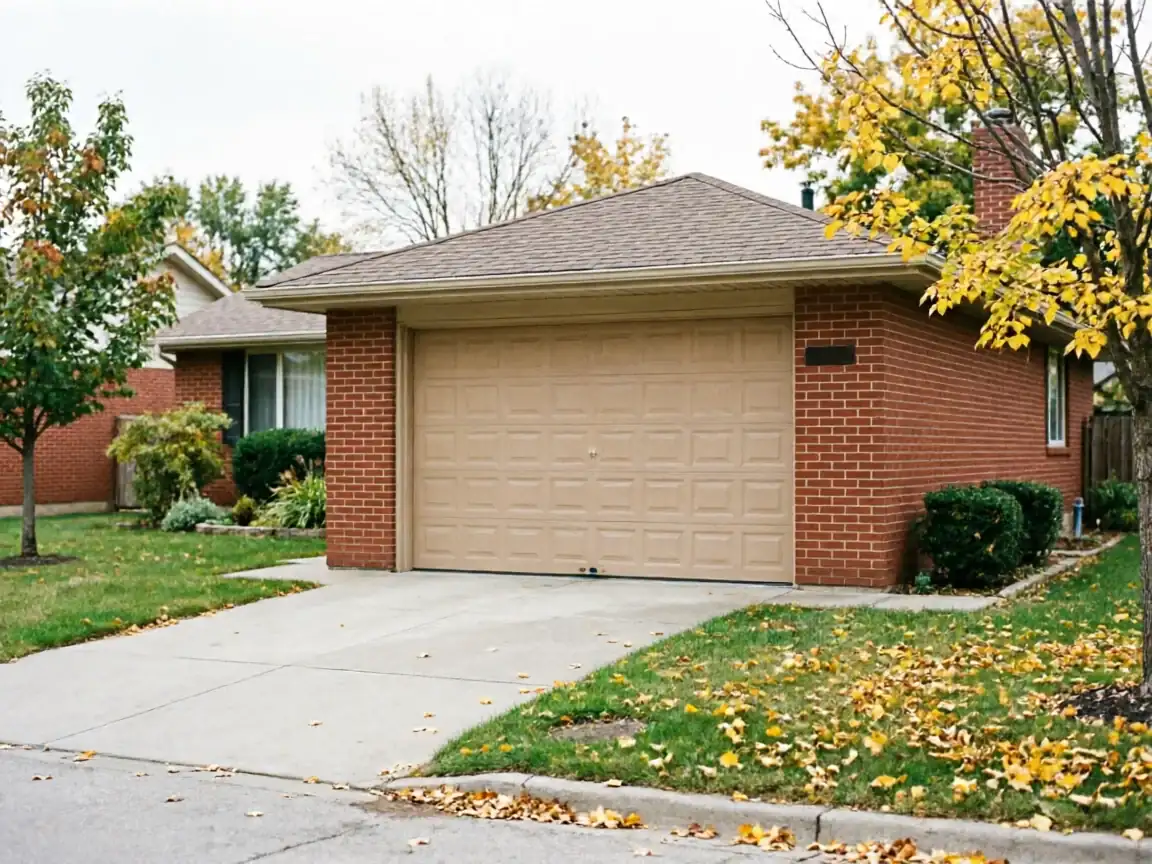
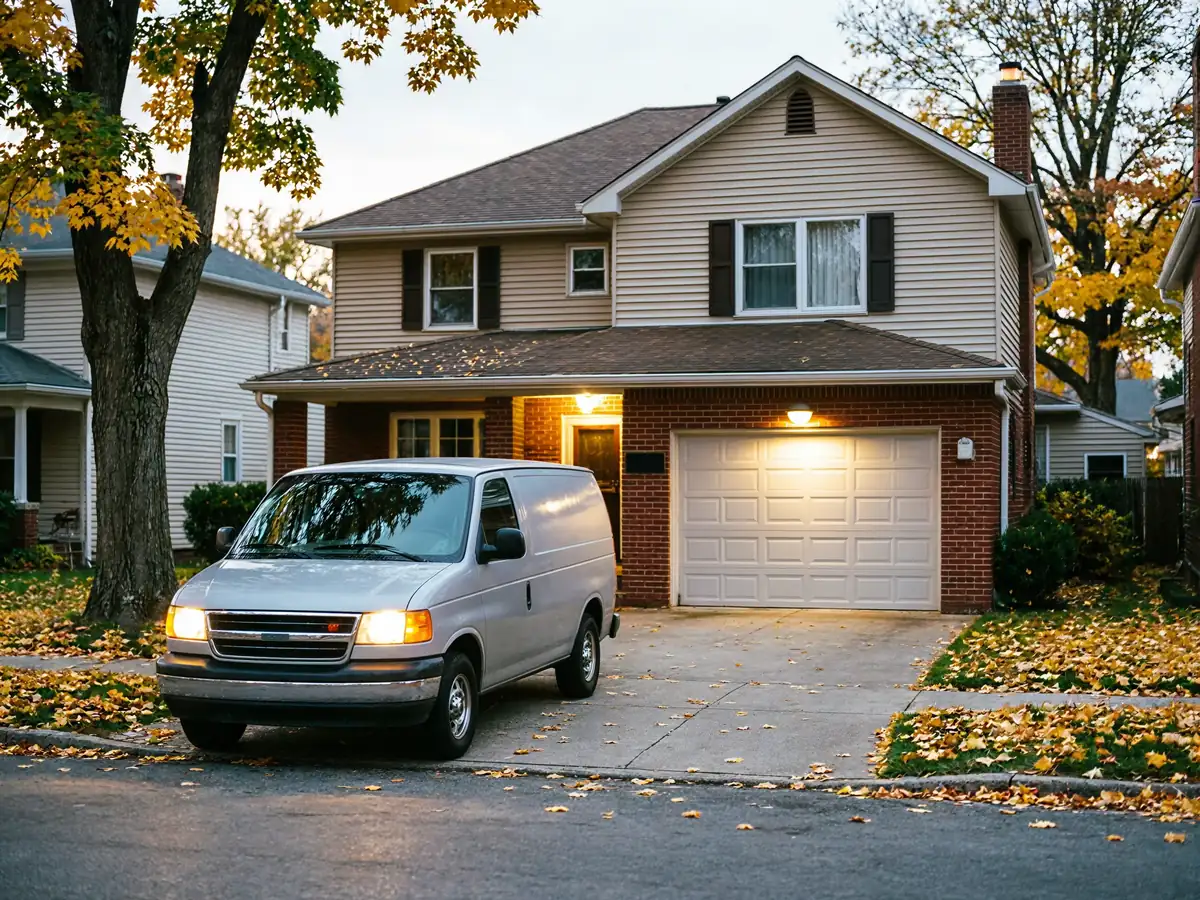
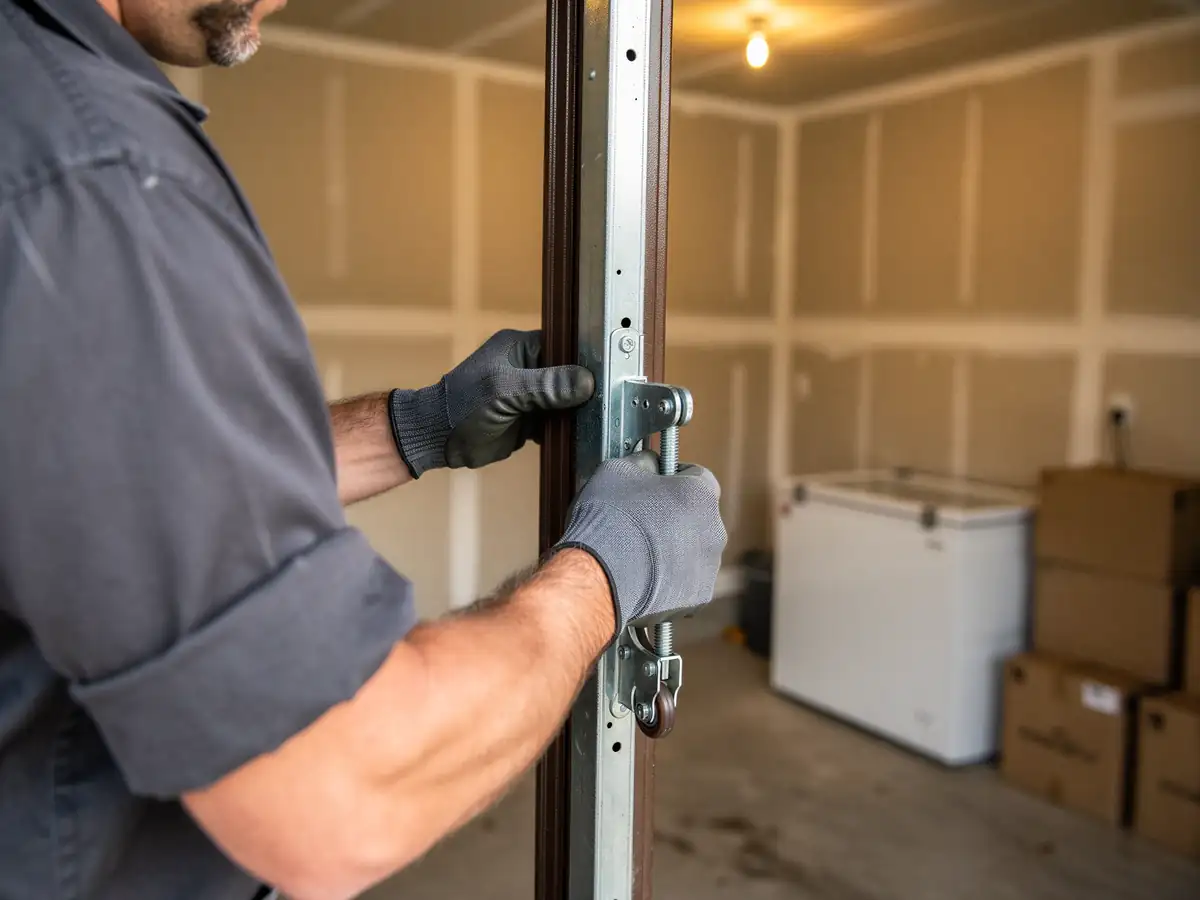
Vandercook Lake sits four miles from our Jackson shop, close enough that we load the truck before we know exactly what we're walking into, because the drive doesn't give us much lead time to guess. Most houses in this pocket of the service area went up around 1956, which means the track hardware we see here runs older than what you'd find on new construction: galvanized track sections that have thinned at the bends, roller brackets fastened with carriage bolts instead of the current hex-head style, and jamb brackets that were never meant to hold today's heavier insulated doors. We carry both sizes of track, standard and heavy-duty roller brackets, and a range of roller styles so we're not making a second trip for a part that should've been on the truck the first time. A door that's jumped track on 1950s hardware usually bent something on the way down - we check the bracket, not just the roller, before we call it fixed.
One honest limit: if the track itself is rusted through rather than just bent, we're not going to hammer it straight and call it a repair. Severely corroded track gets replaced, and that part may need to be ordered rather than pulled straight off the truck.
How It Shows Up
Off-track problems here tend to follow a pattern tied to the age of the hardware and the winters this area gets
Jackson's service area sits in a cold, severe climate band, and a door that's been fighting ice buildup at the bottom seal all winter puts extra sideways load on rollers that are already decades past their intended service life. You'll usually notice it as a door that hangs crooked at the bottom corner, a roller sitting outside the track instead of inside it, or a loud bang partway through opening where the door catches and then drops a half inch. Sometimes it's slower - a door that's been rubbing against the track edge for weeks, wearing a groove into the roller, until one cold morning it finally jumps free.
With roughly 1,897 households in this area and a lot of them sharing that same mid-1950s build window
We see the same failure on different streets more often than you'd expect. It's rarely a one-off defect; it's the hardware aging at the same rate the houses did.
- 1,897 households
How to Book
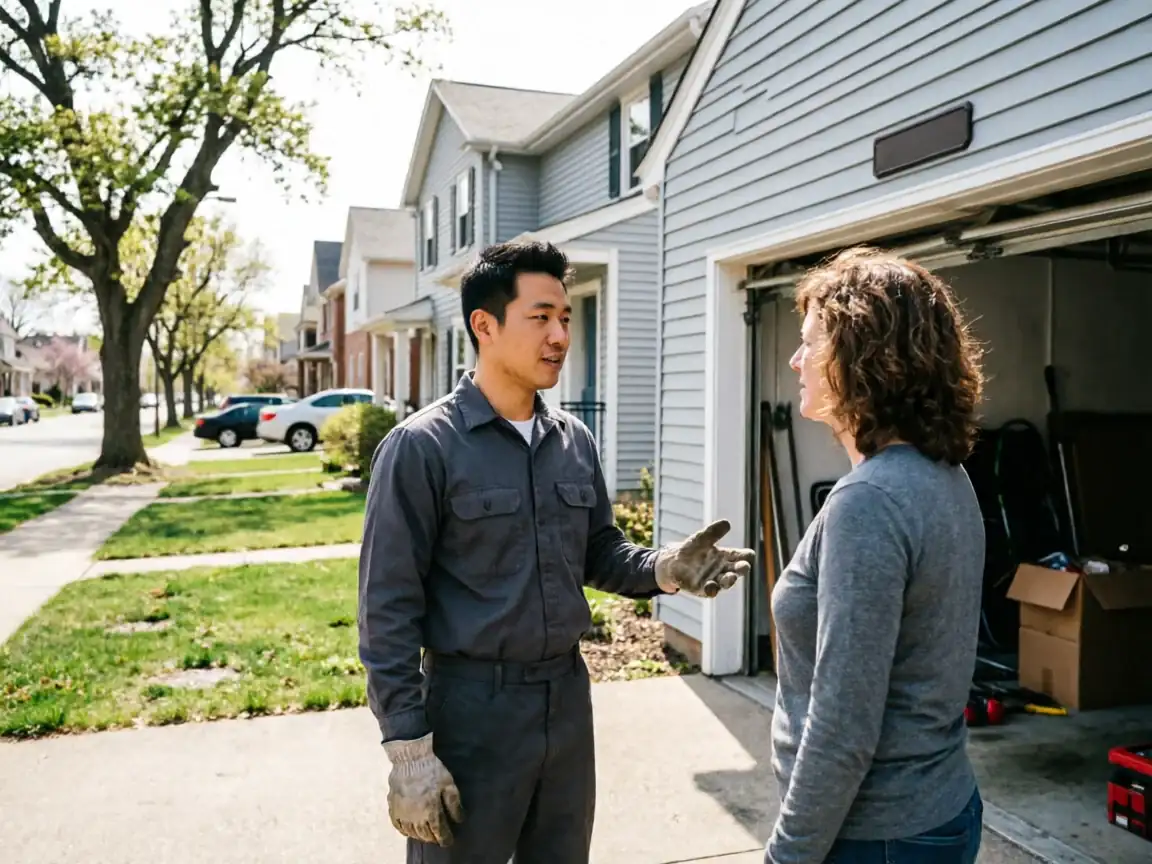
Call it in and tell us the door is off track - that detail changes what's on the truck when we head out from Jackson. The four-mile drive out here is short enough that scheduling isn't the constraint; matching the right bracket and roller stock to a house built in the 1950s is. If you can tell us roughly when the house was built, or whether the door's ever been replaced, that's more useful to us than a photo of the gap alone.
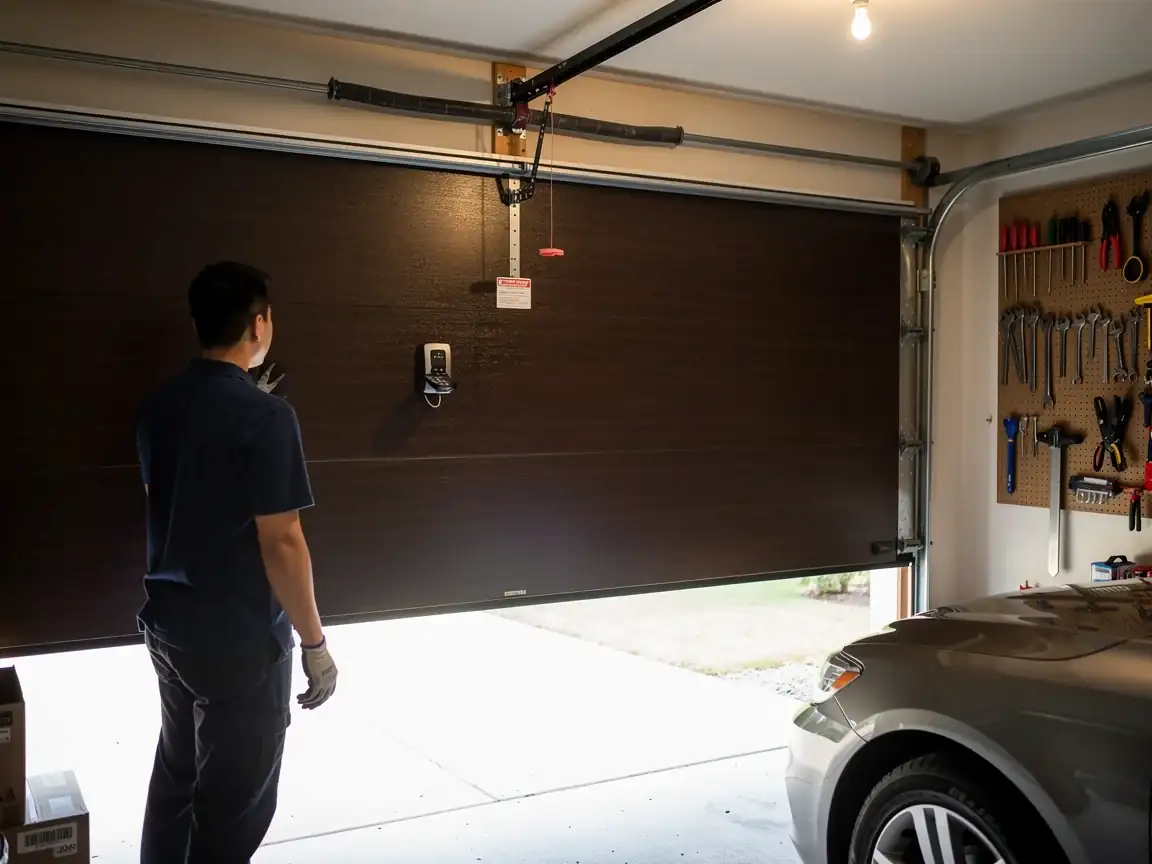
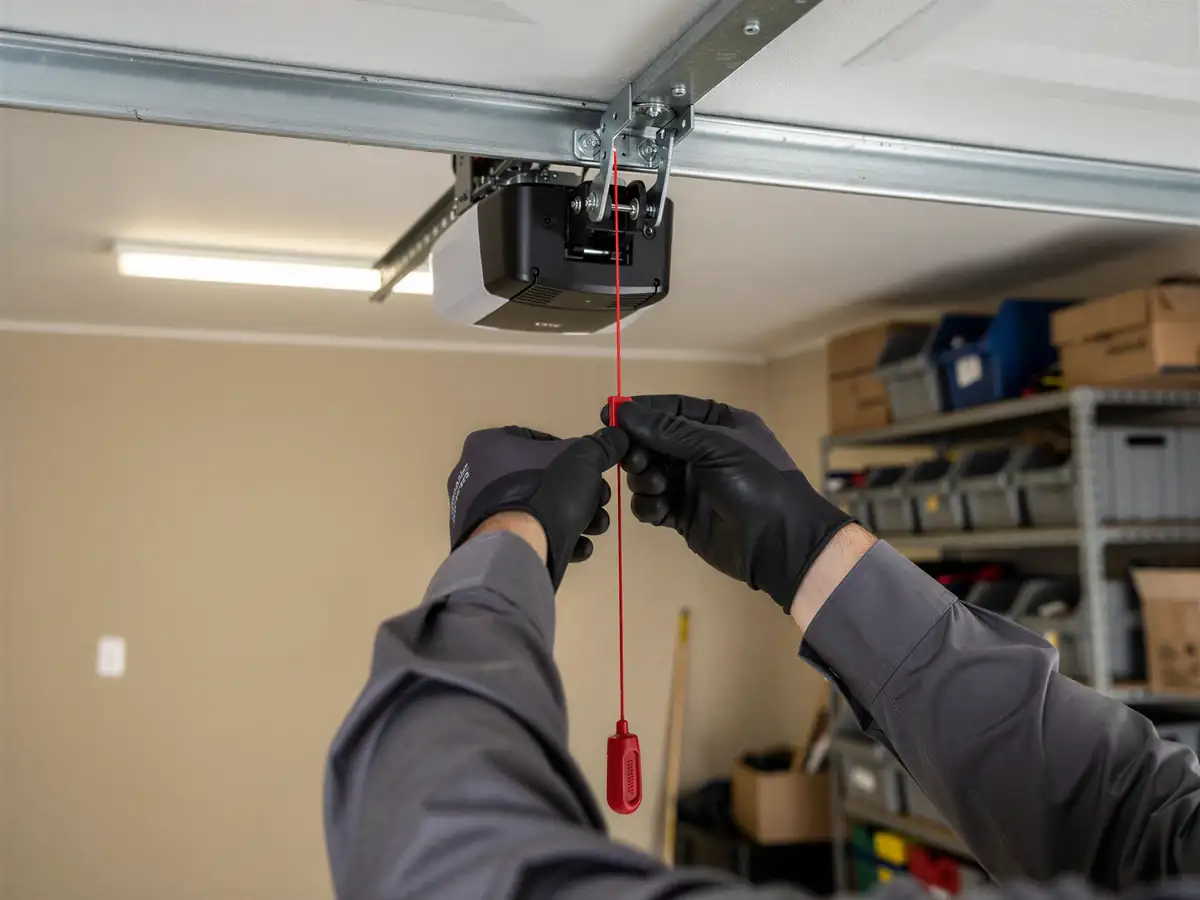
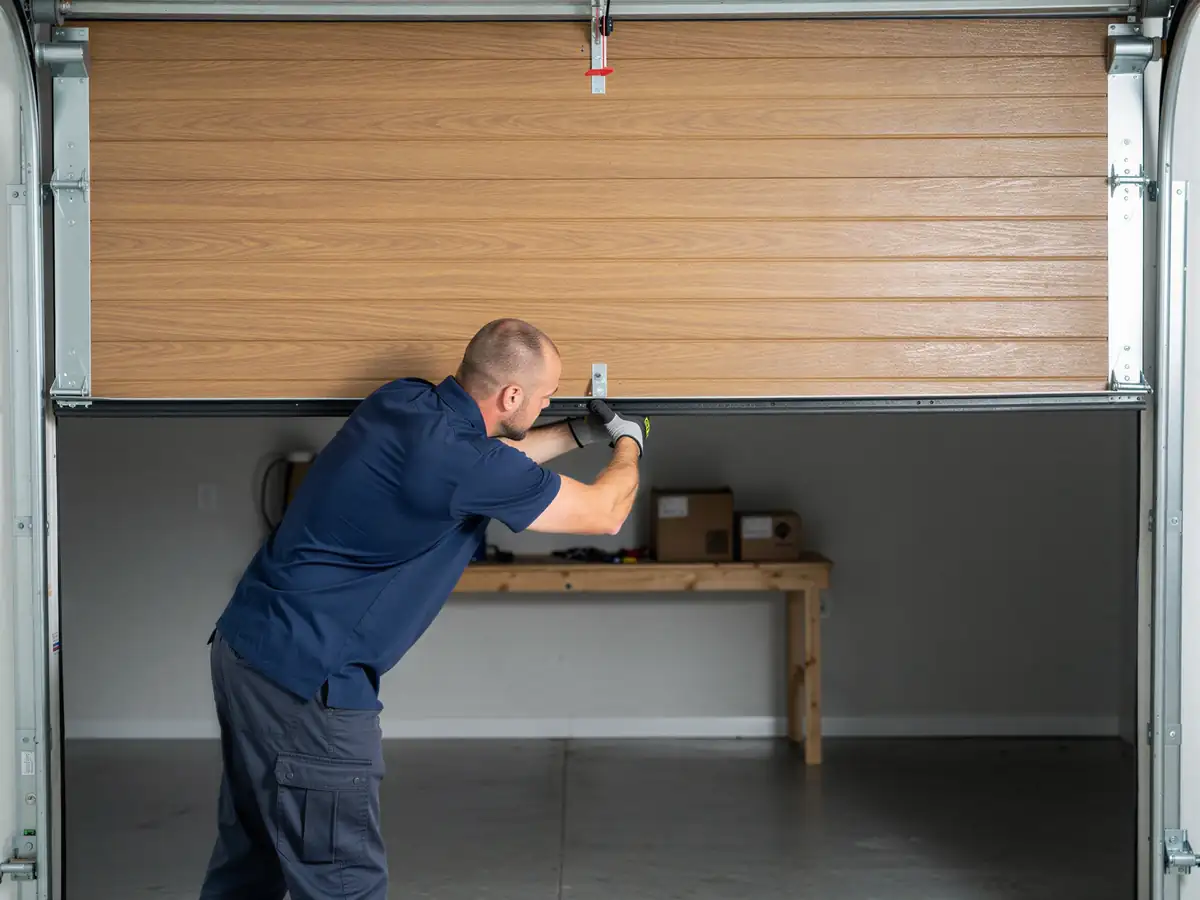
Don't try to force the door back onto the track yourself. A door hanging on one cable with a bent bracket is under real spring tension, and pushing on it to see if it'll slide back in is how a minor repair turns into a trip to the ER instead of a call to us. Shut off the opener, leave the door where it sits, and call.
How We Fix It
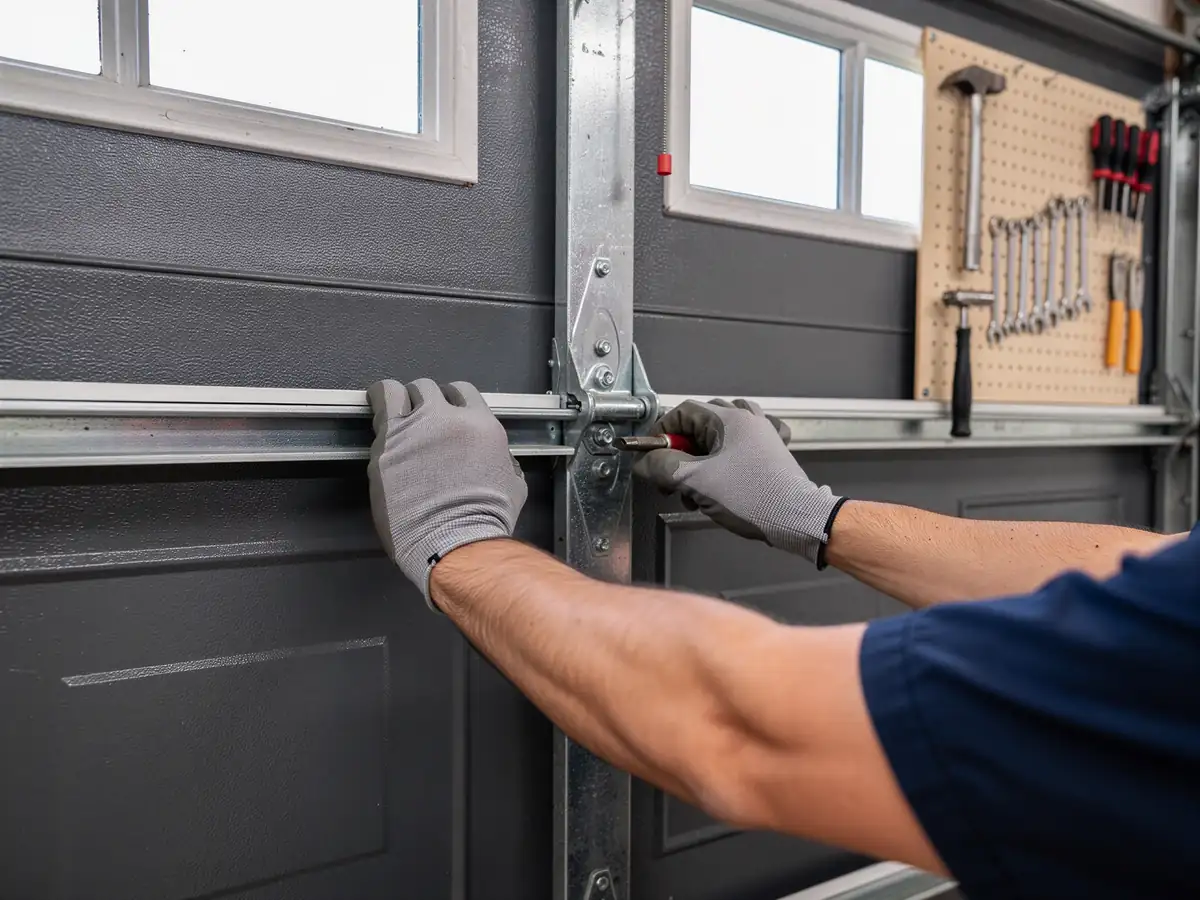
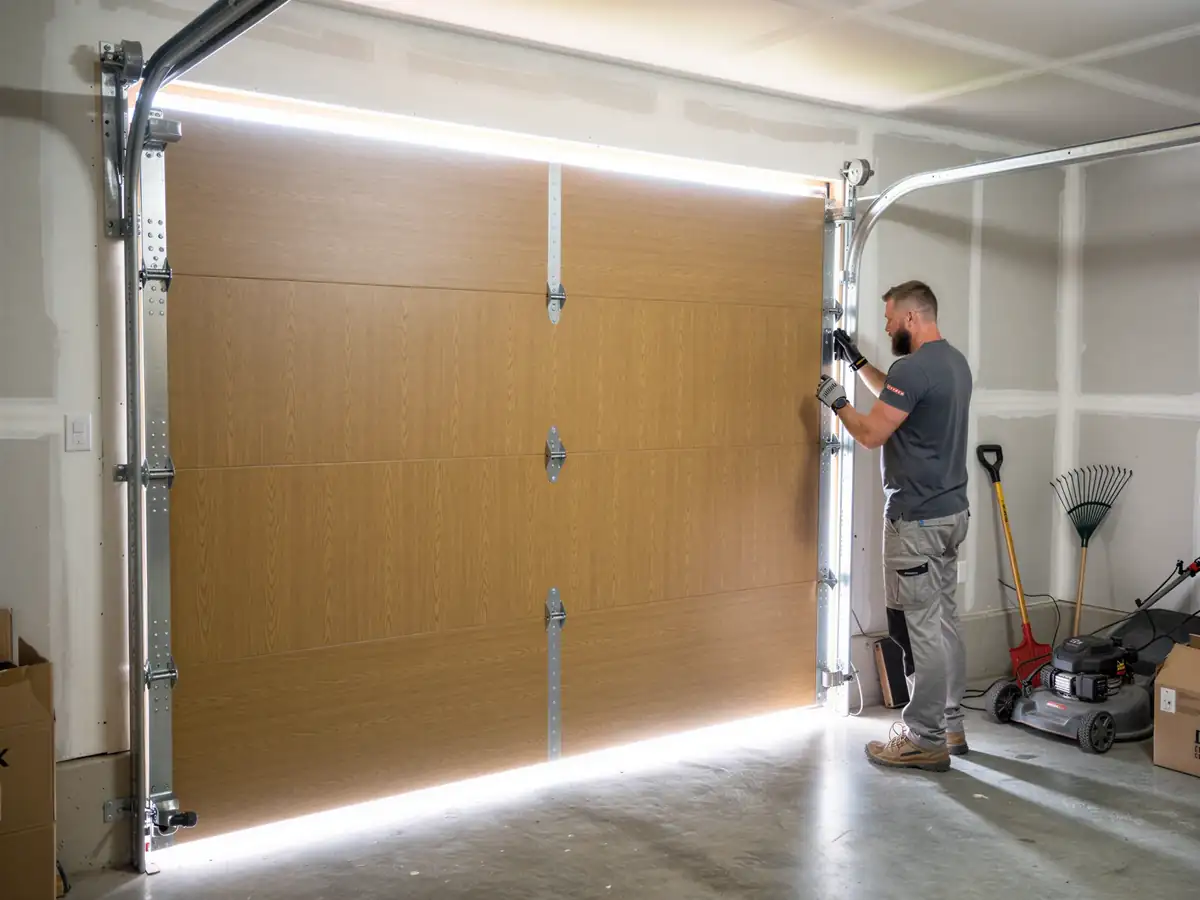
First we find out why it came off, not just put it back on. On the older stock common in this area, that usually means checking whether the bracket itself has spread or bent - if it has, resetting the roller into a damaged bracket just sets up the next failure. We true up or replace the bracket, replace any roller that's worn a flat spot or cracked, and check the track alignment against the jamb on both sides, since houses from this build era have settled over seventy years and the original alignment isn't always square anymore.
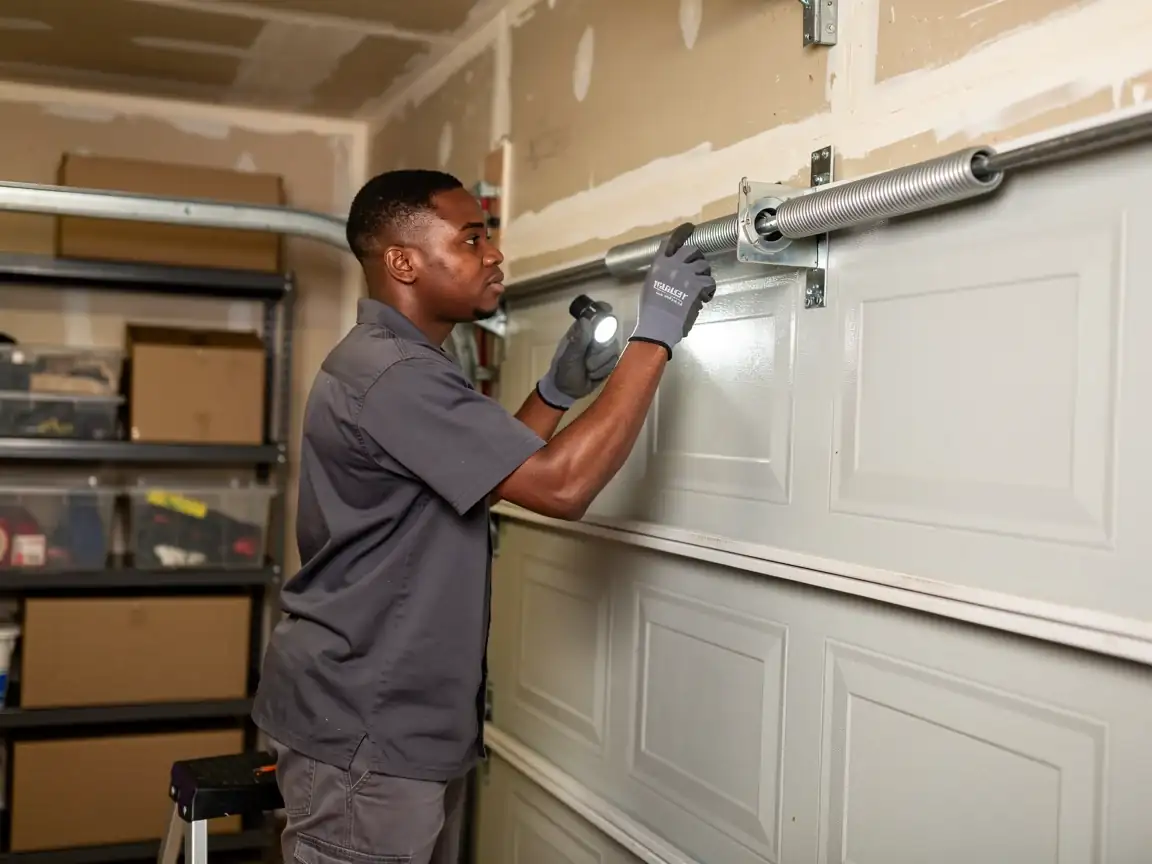
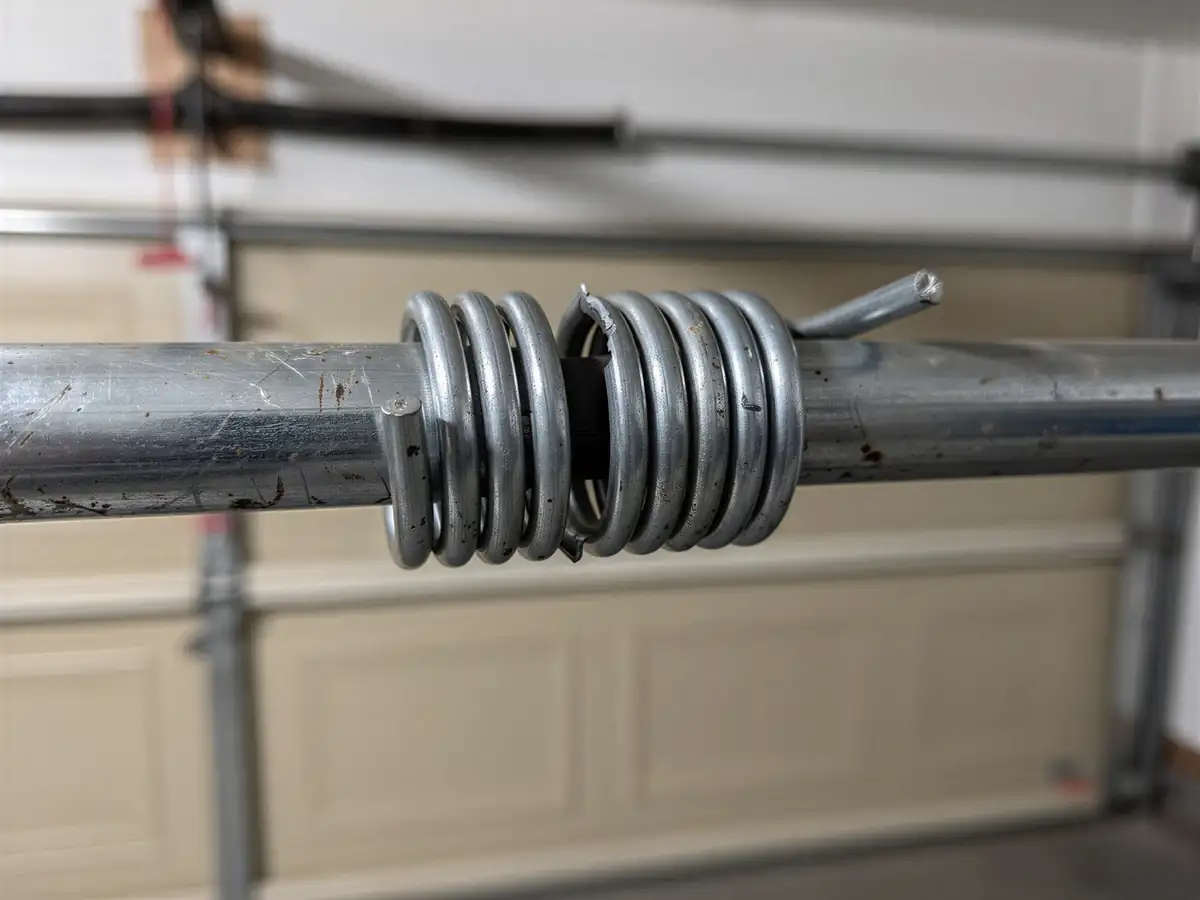
We also check the cable and spring while we're in there, because a door that's gone off track under tension sometimes stresses the cable at the drum, and that's not something you want to find out about later with the door open overhead. Most off-track calls on hardware this age take one visit. If the opener's travel limits got thrown off by the drop, we reset those before we leave rather than let you discover it the next time the door closes on something it shouldn't.