Serving Jackson, MI & nearby
(517) 271-1747
Jackson, MI

What's Included When You Book a Service Call in Jackson

A look at what actually happens when a tech shows up at a Jackson-area house, tied to the age of local housing stock and the cold this region gets every winter.

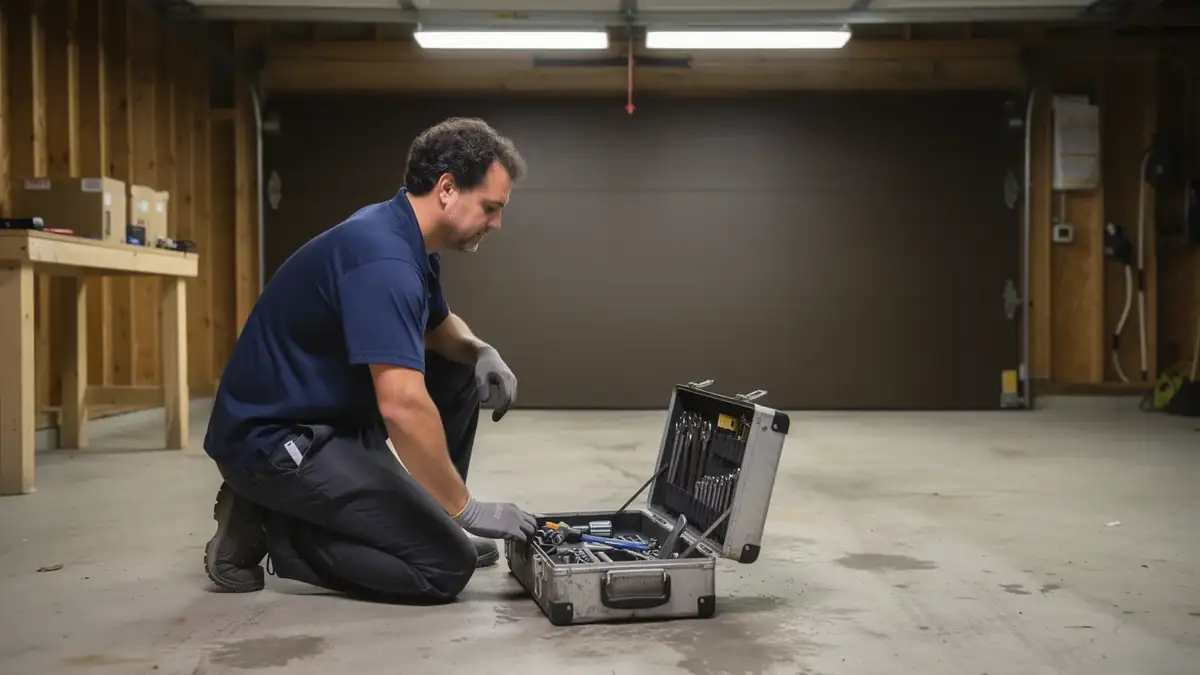
A technician kneels on a concrete garage floor, looking into an open toolbox.

What Most People Get Wrong

Most callers think a service call means a tech shows up, glances at the door, and quotes a new opener. That's not what happens on this side of the state. Houses in this part of Jackson mostly went up between 1938 and 1988, with the typical place built around 1954, and that single fact changes the whole visit. A tech working on a house from that era isn't diagnosing a modern torsion system - he's figuring out whether the original hardware can even take a replacement spring of the right size, or whether the track was re-hung at some point by a previous owner and is now pulling against itself. People expect a quote. What they get first is measurement: spring wire gauge, drum size, cable diameter, track gap, because none of that is standardized across a house built in 1954 versus one built in 1985. A service call on a pre-1960 door often runs longer than the same call on a newer build, not because the work is harder, but because the parts aren't off a shelf. That's the piece nobody mentions until the tech is already in the garage with a tape measure.

The Situation

Across the area this shop covers - Jackson itself plus nineteen named communities running out to Manchester at twenty miles and Vandercook Lake at four - the housing stock skews old and the construction mostly falls pre-1960. That's not a guess; it's the pattern across the service area, and it means a tech answering a call in Michigan Center (4 miles) or Napoleon (10 miles) is usually looking at the same vintage of door and hardware he'd find on a Jackson street. With 9,872 owner-occupied houses and 14,232 households total in this area, and a median household income of $65,349, most of what comes in are repair calls on a door someone's owned for decades, not a first-time install. A service call here starts with a walk-around: hinges, rollers, cable fray points, the condition of the bottom bracket, and whether the opener is original to the door or a later retrofit that was never matched to the spring weight. None of that shows up on the phone. It's why an honest quote waits until someone's actually looked at the hardware in front of them.

How Local Conditions Play In

This region sits in the severe end of the cold climate band, and that matters more to a garage door than most people expect. Grease in an older torsion spring stiffens in deep cold, and a door that's been fine all fall will suddenly bind or snap a cable on the first truly hard-freeze morning. On a 1950s-era door, that stiffened spring is working against hardware that was never built with today's lubricants or coatings in mind, so the failure mode is often abrupt instead of gradual. A tech working a winter call in this area is checking for exactly that: has the spring lost tension unevenly, is the cable showing wear concentrated at the drum, has the track pulled slightly out of plumb from frost heave under the slab. None of that is a modern-door problem - it's a cold-climate, old-housing problem, and it's the reason a service call here includes a cold-weather check even when that's not what the homeowner called about. Skipping it on a house from this era, in this climate, is how a minor repair turns into an emergency call three weeks later.

Doing Nothing For Now

Sometimes the honest answer is to wait. If a spring is still holding tension and the door is opening evenly, a tech isn't going to push a replacement just because the house is old - the hardware on a lot of these 1950s and 1960s doors is sturdier than what gets installed new today, and there's no reason to pull a working system apart. Where waiting gets risky is a cable that's already fraying or a track that's visibly out of alignment going into winter; in this climate, cold makes a marginal part fail faster, not slower. One limitation worth saying plainly: not every part on a door this old is something a tech can source same-day. Some original hardware on a 1950s install has to be special-ordered or matched with a comparable modern part, and that can mean a short wait between diagnosis and final repair. That's not a reason to put off the call - it's a reason to make it before the part fails on its own.
How it works

From “it’s stuck” to “it’s fixed”

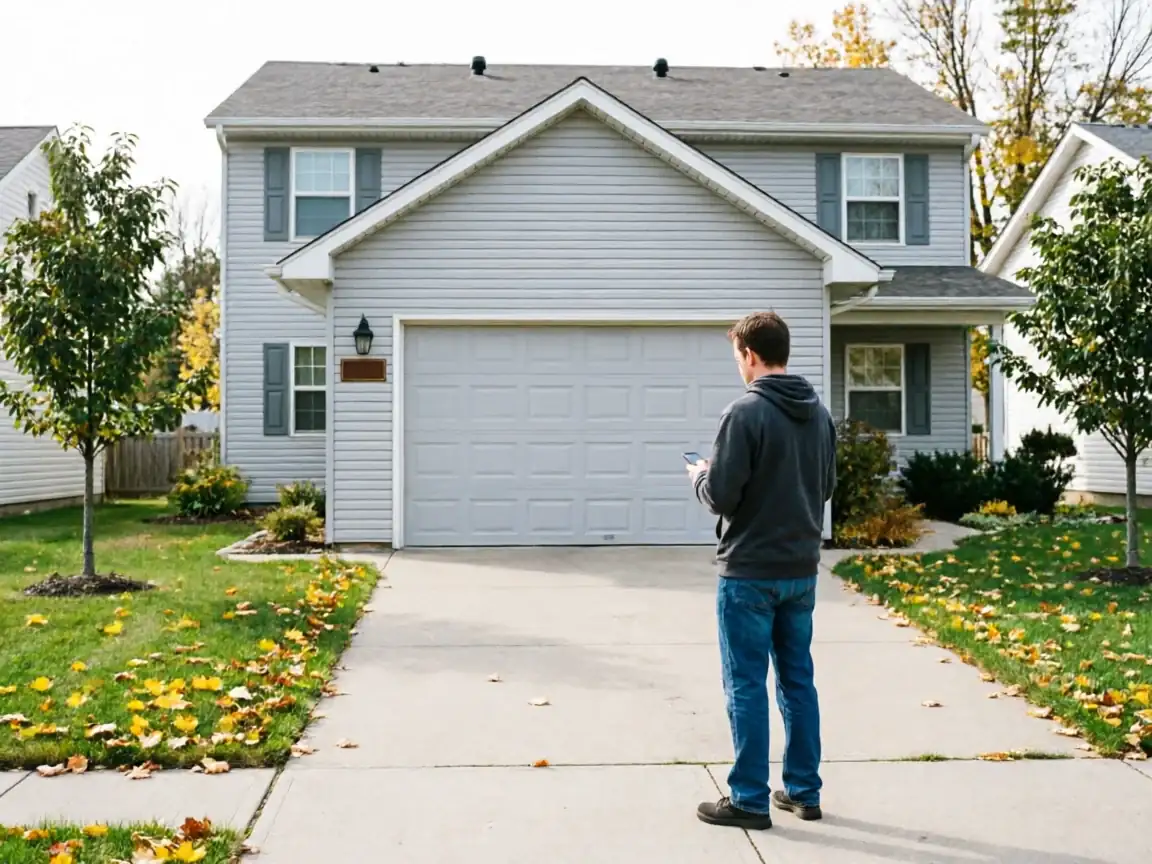
A man stands in a driveway looking at his phone in front of a house.

Tell us what’s wrong

Describe the symptom - won’t open, loud bang, opener runs but the door won’t move.

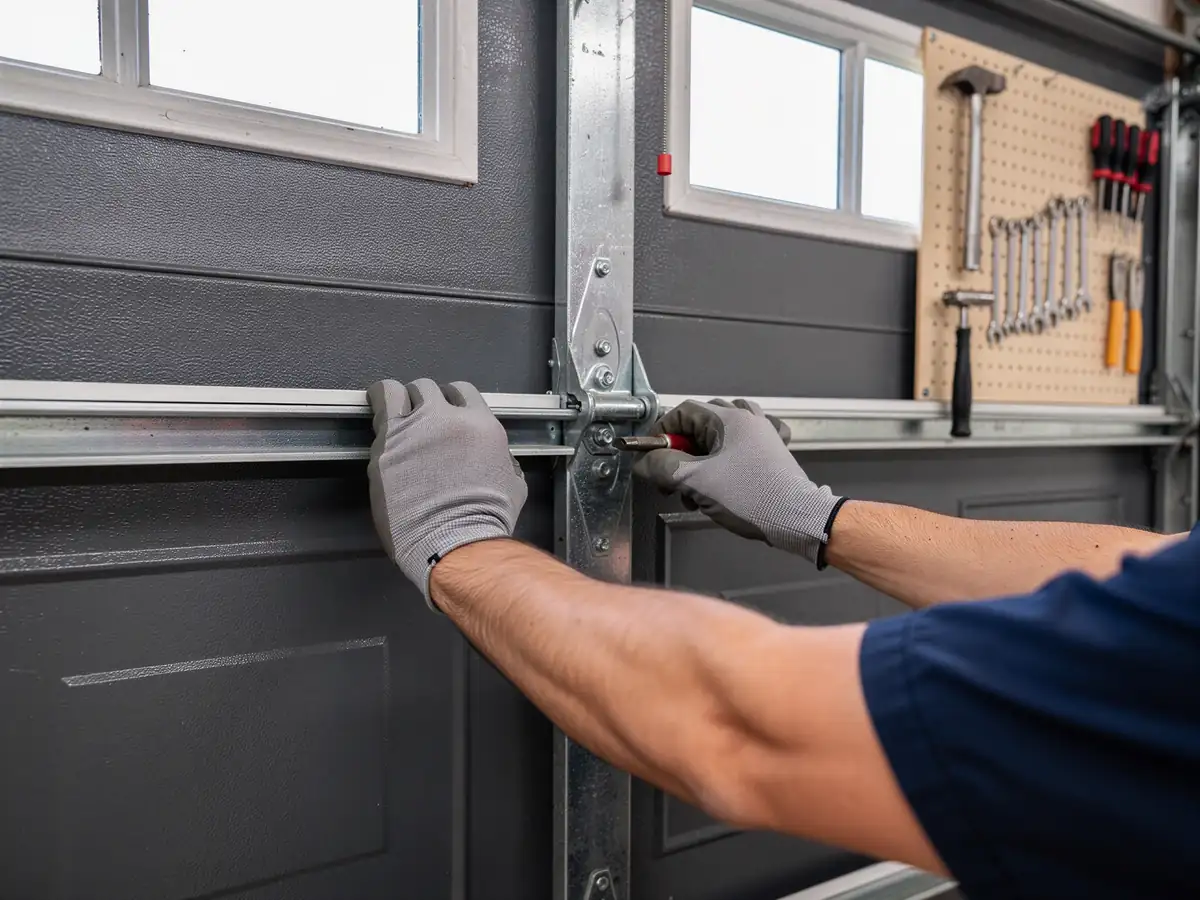
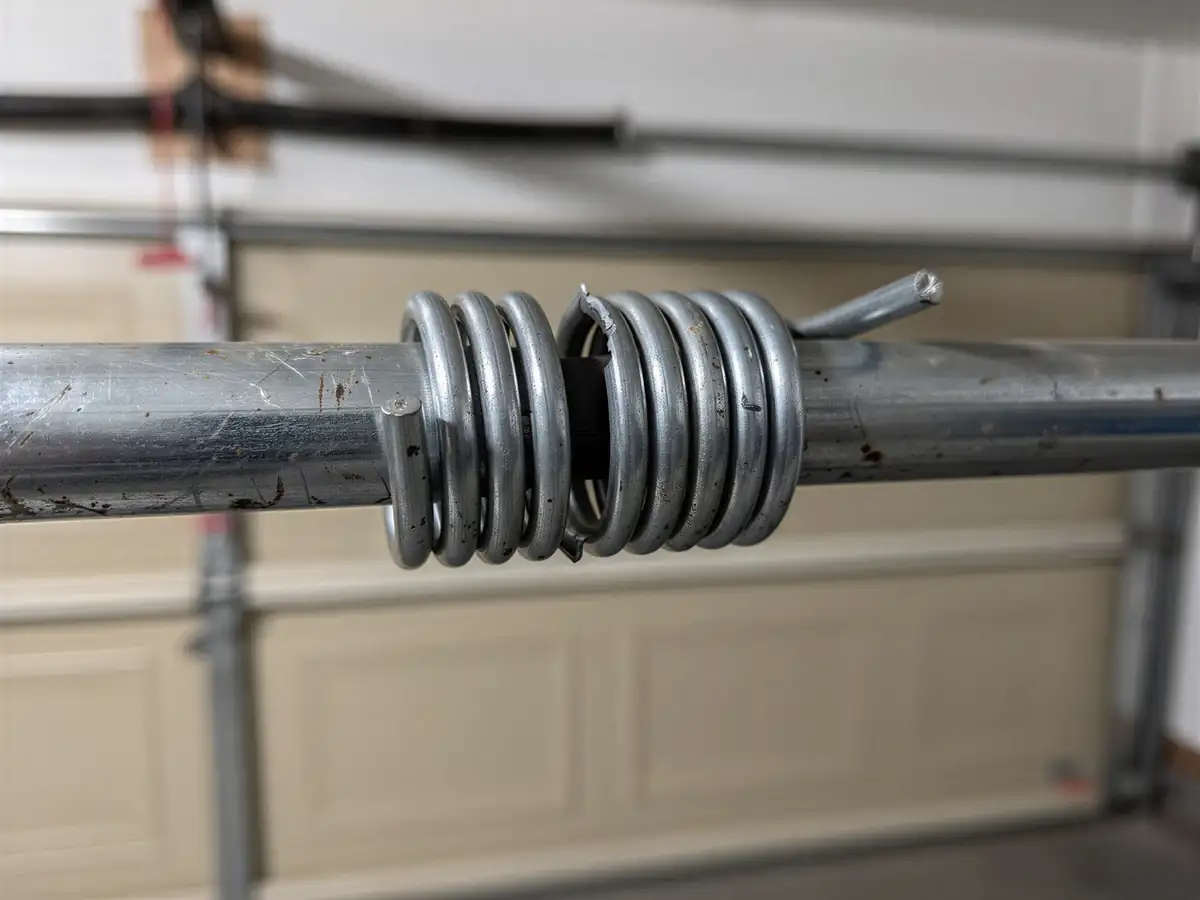
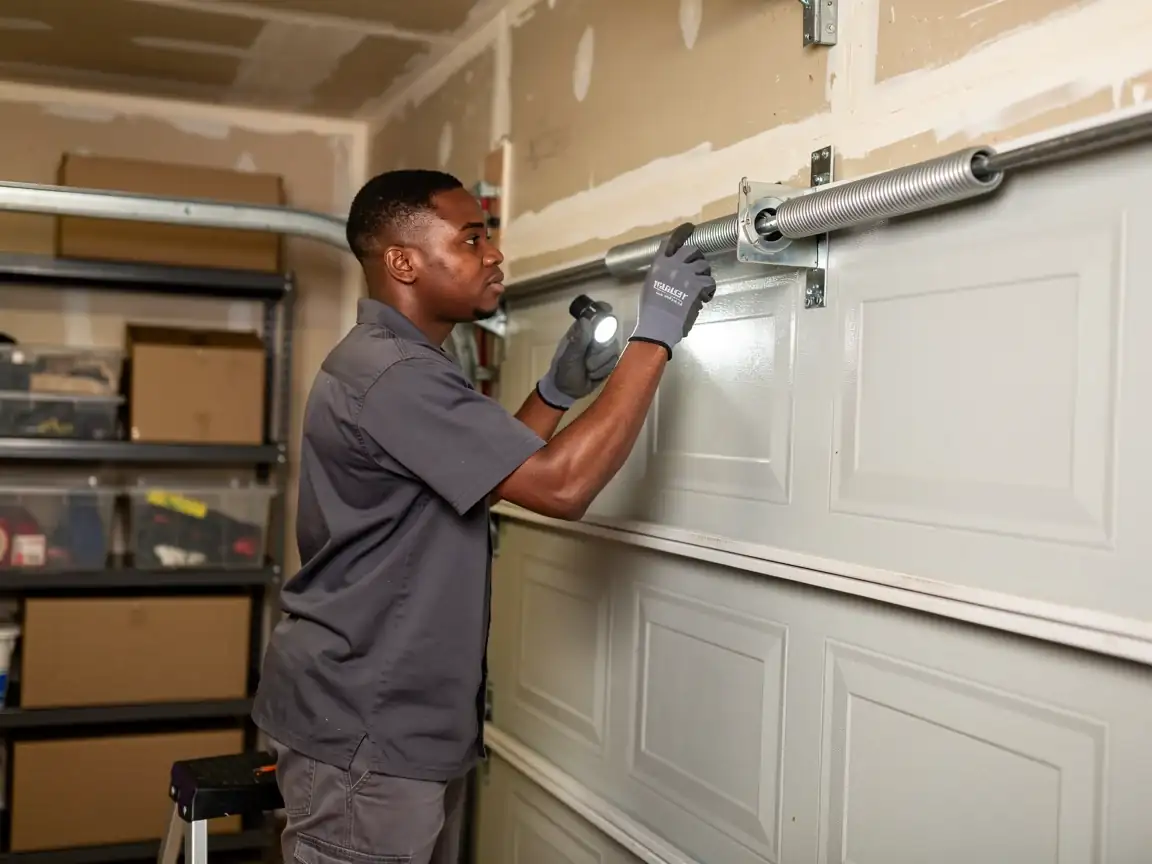
A technician holds a flashlight and examines a garage door torsion spring.

On-site diagnosis

A technician tests the door under power and by hand and finds what actually failed.

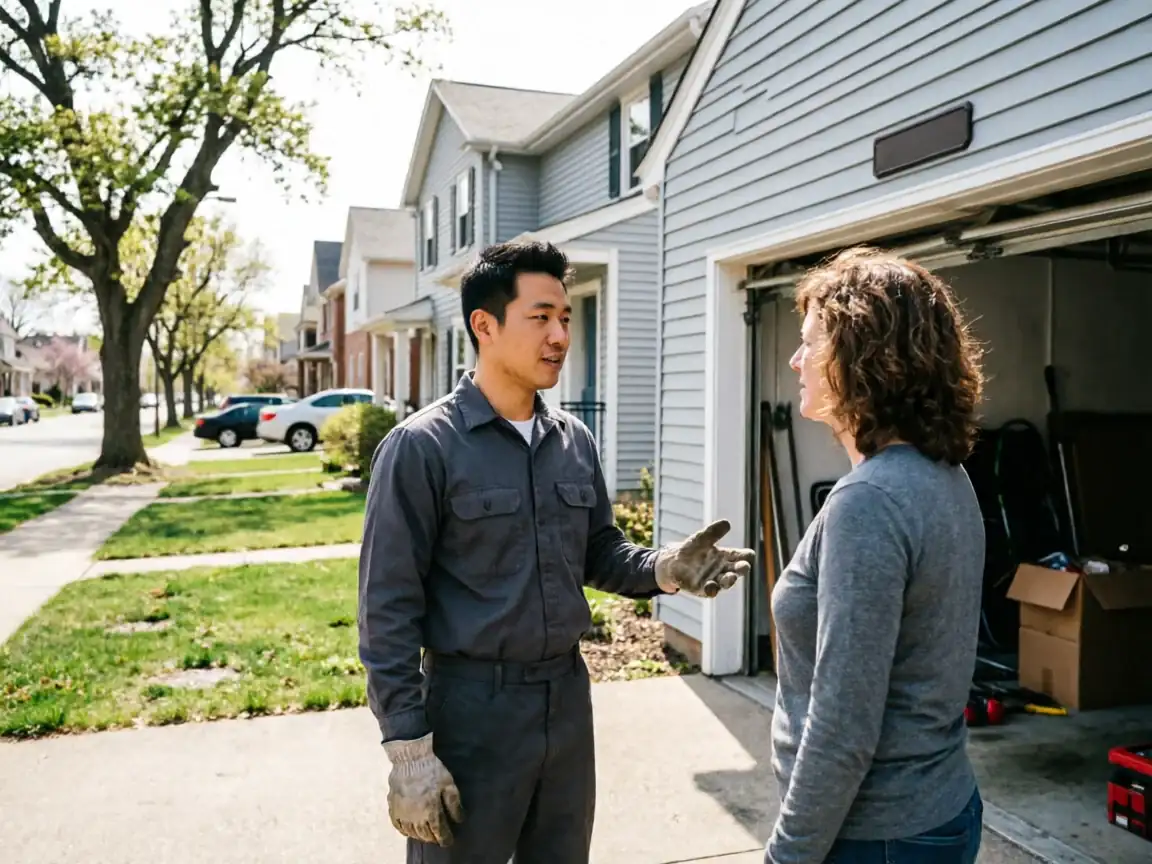
A technician talks to a woman in front of a light blue house with an open garage.

Clear, up-front plan

You get the fix that’s needed and what drives the cost - before any work starts.

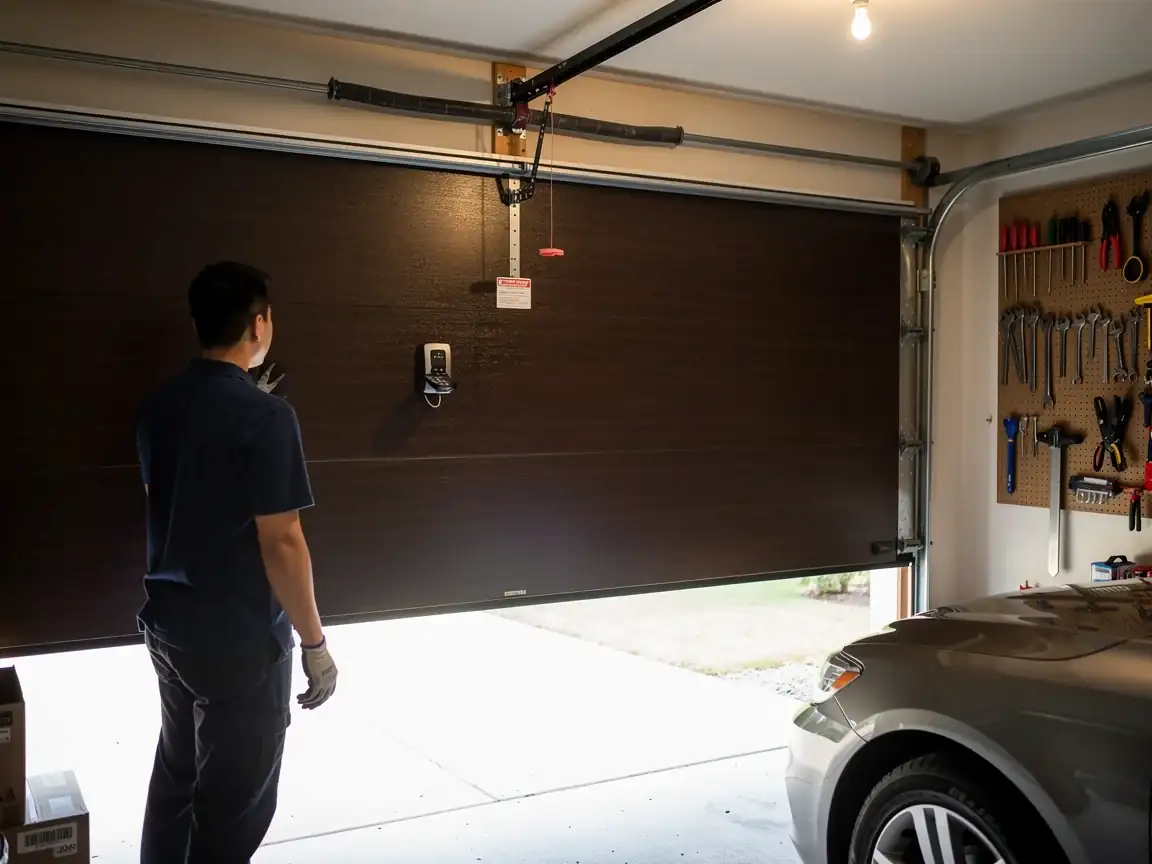
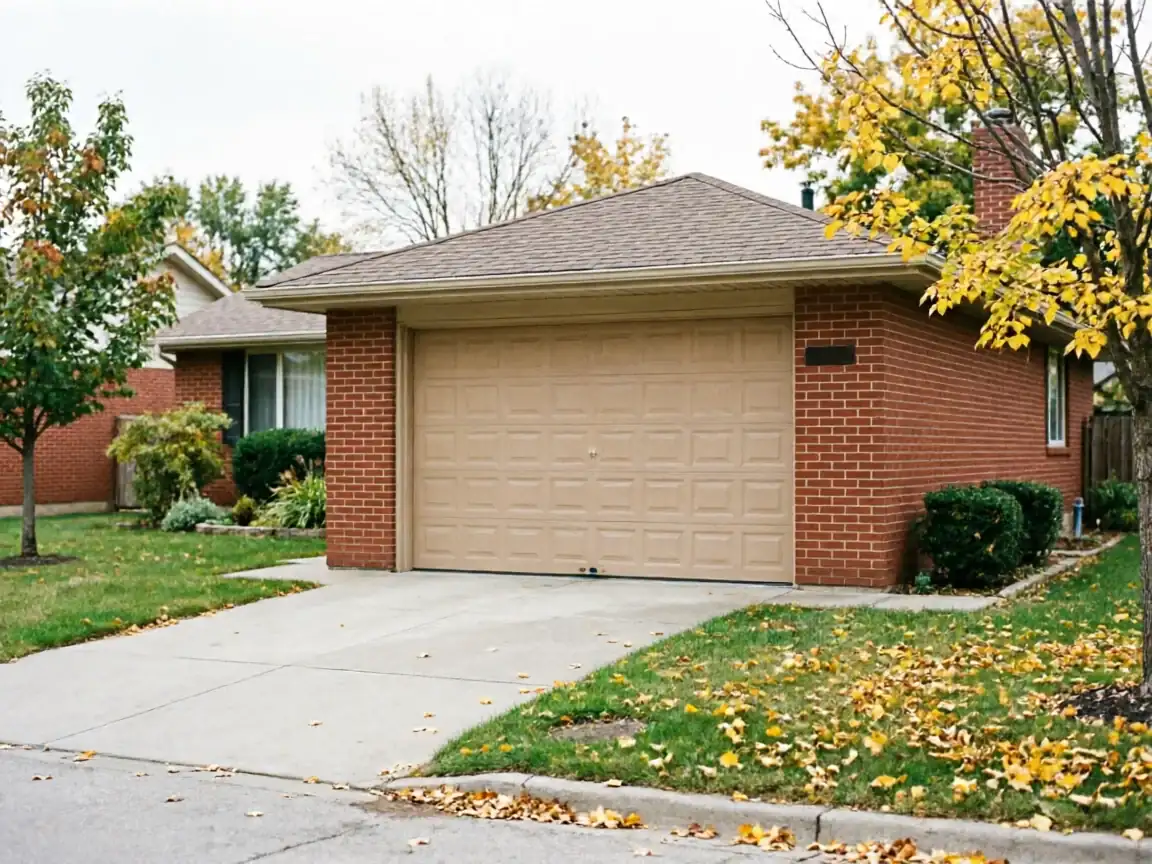
A technician stands in a garage looking at a brown garage door.

Repaired & tested

The repair is done, the door is set true and tested, and the work area left clean.

Not sure which repair your door needs in Jackson, MI? Describe what it’s doing - every job starts with a diagnosis.

How we work

What to expect

A straight, honest approach on every Jackson job.

Diagnosis first

Every visit starts by finding what actually failed - not a pre-written parts list.

The right part for the door

Springs and openers matched to the door’s weight and age, so the fix holds up.

Straight answers

When a repair makes more sense than a replacement - or the reverse - you hear it plainly.

Clean, careful work

Tension released safely, hardware set true, the door tested under power before we leave.

What we do

Garage Door Services

Repair and installation work for Jackson homes and businesses.

Questions

Frequently asked

Straight answers about garage door repair in Jackson. Still unsure? Ask us directly.

Why does the age of my house matter for a garage door call?

Because most houses in this area were built between 1938 and 1988, with the typical one going up around 1954, a lot of original hardware is still in place. That hardware wasn't standardized the way modern parts are, so a tech has to measure and match rather than grab an off-the-shelf spring or cable.

Does the cold actually cause garage door failures here?

Yes. This area sits in the severe end of the cold climate band, and stiffened grease in an older spring assembly is a common cause of sudden cable snaps or binding doors on the first hard-freeze mornings of the season, especially on pre-1960 hardware.

Do you come out to Michigan Center or Napoleon?

Those towns sit about four and ten miles out respectively, and the housing stock there tends to match what we see on the Jackson side - mostly pre-1960 construction with original torsion hardware still in place.

Will every call end with a new door or opener?

No. If the spring is holding tension and the track is aligned, there's often no reason to replace a working system just because it's old. A service call starts with diagnosis, not a sales pitch.

Ready to get your garage door sorted?

Tell us what it’s doing and where you are in Jackson - we’ll take it from there.

Request a QuoteCall